| X. THE FEDERAL AIRWAYS SYSTEM AND CONTROLLED AIRSPACE
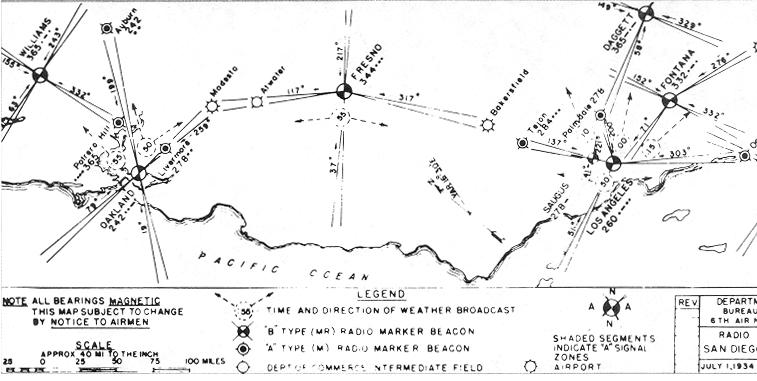
System Details Up to this point, your instrument training has been concerned largely with problems within the cockpit. While you have been acquiring proficiency in the use of basic flight instruments and NAV/COM equipment, your instructor has kept a watchful eye on other traffic. You have been told what maneuvers to execute, what radials to fly, when and where to go. Instrument flying would be relatively simple if your instrument training ended with mastery of these basic techniques and, with a safety pilot aboard to keep you headed in the right direction, safely separated from other traffic. Your problem now is to learn how to use the facilities, services, and procedures established by the Air Traffic System to provide directional guidance, terrain clearance, and safe separation for aircraft operating under Instrument Flight Rules. The extent of this system and the facilities maintained for airspace users can be appreciated by visualizing the tremendous expansion of aviation since 1903 when only one airplane used the national airspace. Figure 10-1 shows the low-frequency radio facilities serving the Los
Angeles-Oakland area in 1934. The navaids provided only one route between those
two terminals via the Los Angeles, Fresno, and Oakland range legs. Figure 10-1. Navaids during the 1930's.
By the late-1970's, the Nation's air fleet exceeded 200,000 aircraft, with as many as 90,000 people aloft at any busy hour, most of them converging on, or departing from, major metropolitan areas. In 1977, the 2,491 navigation aids needed to keep these aircraft moving safely throughout the 50 States were listed as follows (exclusive of non-directional beacons, precision approach radar systems, and non-Federal or special use aids): 25 Air Route Traffic Control Centers - (includes 2 Center/RAPCONs).
The airways system resembles its automotive counterpart in many ways. Whether you travel by Federal airway or Federal highway, the system must provide a controlling agency, procedural rules, directional guidance, highways between population centers, and a means of access between highways and terminals. The components of the Air Traffic System, the controlling agency, and the procedures established for your use of the system are discussed in this and the following chapter. In a later chapter, you will apply what you have learned to a sample flight planning problem.
|