| One of the major differences between the operation of a
seaplane and that of a landplane is the method of maneuvering the aircraft
on the surface. The landplane will usually remain motionless with the
engine idling, particularly with the brakes applied, but a seaplane, since
it is free floating, will invariably move in some direction, depending
upon the forces exerted by wind, water currents, propeller thrust, and
inertia. Because a seaplane has no brakes, it is important that the pilot
be familiar with the existing wind and water conditions, effectively plan
the course of action, and mentally stay "ahead" of the aircraft.
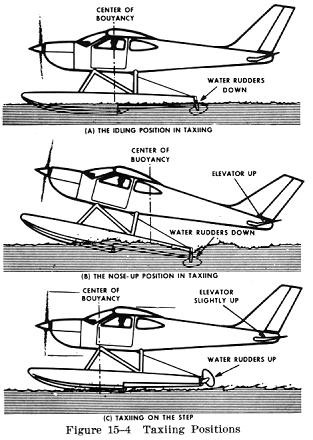
There are three positions or attitudes in which a seaplane
can be moved about on the water: (1) the "idling" position, (2) the
"plowing" position, and (3) the "planing" or "on the step" position (Fig.
15-4).
|
|