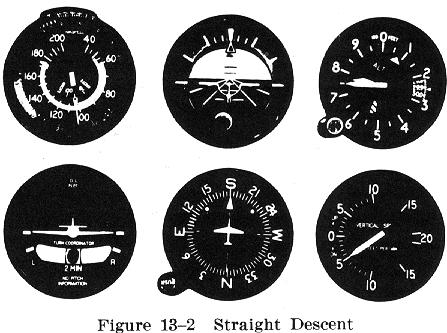
| Straight Descents
When unexpected adverse weather is encountered by the VFR pilot, the most likely situation is that of being trapped in or above a broken or solid layer of clouds or haze, requiring that a descent be made to an altitude where the pilot can reestablish visual reference to the ground. Generally, the descent should be made in straight flight. A descent can be made at a variety of airspeeds and vertical
speeds by reducing power, adding drag (gear and flaps), and lowering the nose to
a predetermined attitude. Before beginning the descent, it is recommended that
first the descent airspeed and the desired headings be established while holding
the wings level. In addition, the landing gear and flaps should be positioned up
or down, to help in maintaining either a slow rate of descent, or a fast rate of
descent, as desired. Establishing the desired configuration before starting the
descent will permit a more stabilized descent and require less division of
attention once the descent is started. Rather than attempting to maintain a
specific rate of descent, it is recommended that only a constant airspeed be
maintained.
In any case, the pilot need not be concerned with slight deviations in airspeed. The main objective is to descend at a safe airspeed - well above the stall but not more than the airplane's design maneuvering speed. While descending, directional control should be maintained by reference to the directional instruments just as described for straight and level flight. Pilots are cautioned against "chasing" the instrument pointers. If any thought was given to the matter before starting the flight, the pilot will have at least a rough idea of the height of obstructions and terrain in the vicinity of the descent. Before starting the descent, then, a decision must be made regarding the minimum altitude to which the descent will be made.
|