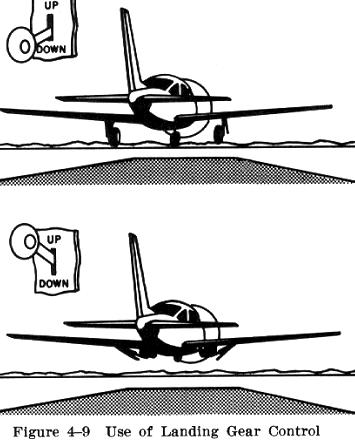
| Another control in airplanes so equipped, is the control for operating
the retractable landing gear. Since the purpose of the landing gear is to
support the airplane while it is on the ground, it is merely excess weight
and drag during flight. Though the airplane cannot be relieved of this
weight while in flight, the landing gear can be retracted into the
airplane structure and out of the airflow, thus eliminating the
unnecessary drag (Fig. 4-9).
The control for operating the landing gear is a switch or
lever, often in the shape of a wheel (to differentiate from the flap
control which has an airfoil shape), on the instrument panel. When the
control is moved to the DOWN position, the gear will extend; when the
control is moved to the UP position the gear will retract. In addition to
this operating control, an indicator or warning light is located on the
instrument panel to show the position of the gear.
The landing gear should be operated only when the airspeed is at or
below the airplane's maximum landing gear operating speed (Vlo). Operating
at a higher airspeed may cause damage to the operating mechanism. When the
gear is down and locked, the airplane should not be operated in excess of
the airplane's maximum landing gear extended speed. (Vle).
It is extremely important that the pilot form the habit of positively
identifying the landing gear control before attempting to use it to raise
or lower the gear. Otherwise the pilot may inadvertently use the flap
control and operate the flaps instead of the gear. |
|